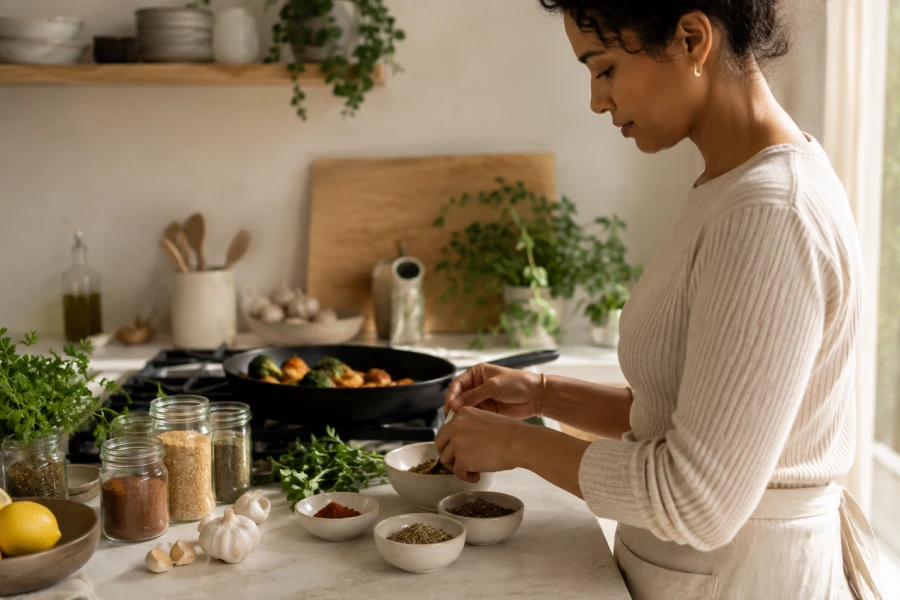
Most home cooks rely on familiar jars because choosing flavors can feel risky. Yet homemade spice blends make weeknight cooking more expressive without adding complicated steps. A chicken tray, pot of beans, or roasted vegetables can become distinct with one deliberate mix. The trick is not collecting rare ingredients. It is learning how heat, sweetness, brightness, and earthiness work together. Once you recognize those roles, seasoning becomes more confident. You also waste less money on half-used blends with unclear labels. A repeatable system replaces guesswork with personal taste. That shift makes ordinary meal planning feel more creative. It gives simple recipes a dependable signature.
Store-bought mixtures can be convenient, but they often decide the flavor story for you. Making a small batch puts salt, heat, and aroma under your control. That freedom matters when your household prefers gentle warmth or brighter citrus notes. Start with one intended meal rather than a vague wish to season everything. Grilled vegetables invite smoke and acidity. Lentils respond well to cumin, coriander, and warm chile. Breakfast potatoes need another direction entirely. A thoughtful flavor-building routine helps every ingredient earn its place. Each batch becomes a compact answer to a real dinner. Soon, seasoning stops feeling like an afterthought.
Before opening a cabinet, decide how you want the finished dish to feel. You may want cozy, smoky, fresh, savory, or slightly fiery results. That choice immediately narrows the possible ingredients. Paprika can bring warmth, while lemon peel creates lift. Garlic powder adds familiarity, and dried herbs offer gentle complexity. Contrast keeps a mix interesting without making it confusing. The most useful blends depend on balanced spice ratios rather than one loud ingredient. Taste develops in layers, not in a single dramatic note. Let your intended meal lead the decisions. Your jar will make more sense when dinner arrives.
A well-used spice shelf does not need to look enormous or expensive. Begin with versatile ingredients you already reach for repeatedly. Black pepper, cumin, paprika, garlic, oregano, cinnamon, and crushed chile cover many directions. Then add one or two personal favorites over time. Freshness matters more than sheer quantity. Smell jars before using them, especially older ones. If the aroma seems dusty, the flavor will probably disappoint. A practical pantry flavor system keeps buying decisions focused. You learn what deserves replenishing. Your collection grows through use rather than impulse.
Too many spices can make a blend taste muddy instead of sophisticated. A useful approach includes one primary flavor, one supporting note, and one contrast. Think smoked paprika, garlic, and a touch of orange peel. Consider curry powder, coriander, and a pinch of sweet cinnamon. Let salt remain adjustable when possible, especially for flexible cooking. Ground ingredients should feel evenly mixed before storage. Small test batches reduce disappointment and encourage curiosity. A focused blend gives you more control at the stove. Resist the urge to add every interesting jar. A little restraint makes the final flavor easier to recognize.
Good storage protects the work you have already done. Choose dry containers with tight lids and keep them away from direct heat. Light, steam, and humidity can dull fragrance faster than expected. Labeling a jar with a simple use cue helps later. You might note tacos, soups, roasting, or grilled vegetables. Clear storage also prevents duplicate batches from collecting unnoticed. Building a DIY seasoning collection feels easier when every jar has a purpose. Make smaller quantities until you learn your pace. Fresh blends reward regular use. Your shelf should support cooking, not become another project.
The first batch teaches you more than any ingredient list alone. You notice whether the heat arrives too quickly or fades too soon. You discover which scents feel inviting when dinner is rushed. Repeating a favorite mix helps you recognize small improvements. Keep a loose note of changes that worked. Add more brightness, reduce sweetness, or soften the pepper next time. Familiarity creates confidence without turning cooking into a rigid routine. A reliable personal blend can travel across vegetables, grains, proteins, and sauces. That flexibility makes the effort worthwhile. Eventually, your favorite jar becomes part of how your kitchen feels.

Leave a comment