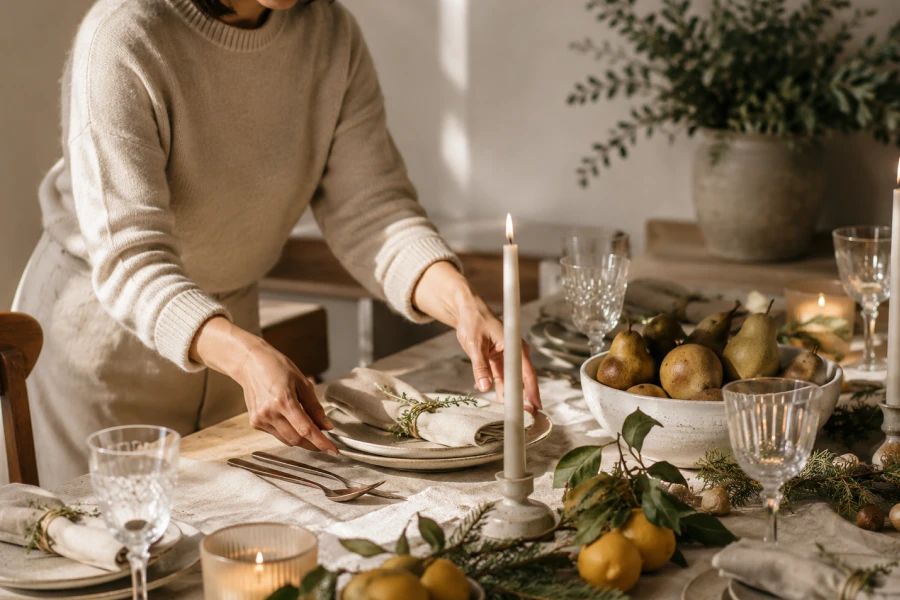
A holiday table does not need dramatic décor to feel memorable. Cozy holiday table styling works when the setting feels welcoming before the first plate arrives. Soft light, thoughtful texture, and a little breathing room can change the entire mood. Guests notice the care in small details. They feel it in a warm napkin, a low candle, or a simple seasonal branch. The goal is not perfection. It is creating a place where people want to settle in. Start with the feeling you hope to create. Then let practical choices support it. A relaxed table makes a gathering feel more generous. It also lets the host enjoy the evening.
Before choosing colors or centerpieces, decide how you want guests to feel. You may want the room to feel calm, nostalgic, playful, or softly elegant. That emotional direction is more helpful than chasing a complicated theme. A warm gathering may call for textured linens and low candlelight. A bright family lunch may need lighter colors and more open space. Let the meal itself help set the tone. The best choices feel connected rather than random. Begin with comfort, then add beauty. A clear feeling gives every later decision a purpose. Your table will look more natural because it has a point of view.
Layering adds richness without requiring expensive pieces. Start with a tablecloth, runner, or simple placemats. Add plates, napkins, glassware, and a few natural accents. Each layer should create interest while leaving room for food. Texture matters as much as color. Linen, wood, ceramic, greenery, and candlelight can work beautifully together. Try using warm tablescape layers to create depth without visual clutter. Keep the center low enough for conversation. A table feels more inviting when guests can see one another. Gentle details will always outlast excess decoration.
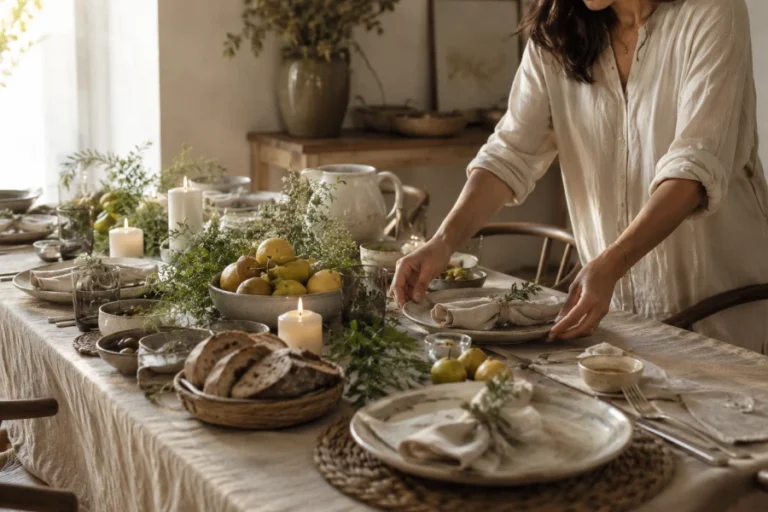
Food should never feel like an afterthought on a styled table. Think about serving dishes before filling the center with décor. A large roast, salad bowl, or dessert stand needs room to arrive. Leave space where platters can land naturally. Use your centerpiece around the meal rather than against it. Smaller accents often work better than one oversized display. A focused holiday centerpiece formula can help you keep proportions in balance. Arrange the table for movement and sharing. Practical beauty makes hosting easier. Guests will notice that comfort.
Lighting can make simple materials look more special. Candles create warmth, especially when their glow stays low and soft. Group a few together instead of scattering many across the table. Choose holders that feel stable and safe around the meal. Natural light can also become part of the scene during daytime gatherings. Avoid anything so tall or bright that it interrupts conversation. Warm illumination should support the food and faces. A low glow makes colors feel richer. It can soften a mixed collection of plates and linens. Use light to create atmosphere, not distraction.
Guests remember how a table feels as much as how it photographs. Keep arrangements low enough for comfortable eye contact. Avoid placing too many objects between people. Choose settings that do not require guests to move décor before eating. A simple fold or natural napkin placement can feel considered without taking space. Small touches matter most when they support ease. Add cozy place setting details that make every seat feel ready. Let each person have room for a glass, plate, and relaxed movement. Hospitality becomes visible through these choices. A welcoming table never feels crowded.
You do not need matching collections to create a thoughtful holiday table. A ceramic bowl, folded linen napkin, and seasonal branch can look beautifully intentional together. Use what you already own before buying more. Repeated colors can tie mismatched pieces into one scene. Natural materials create warmth quickly. Wood, woven textures, greenery, and fruit often feel more inviting than novelty décor. Let one or two details carry the seasonal mood. Editing creates a stronger table than adding endlessly. Your gathering should feel personal rather than staged. The most memorable spaces often look like they belong to the people using them.



Leave a comment