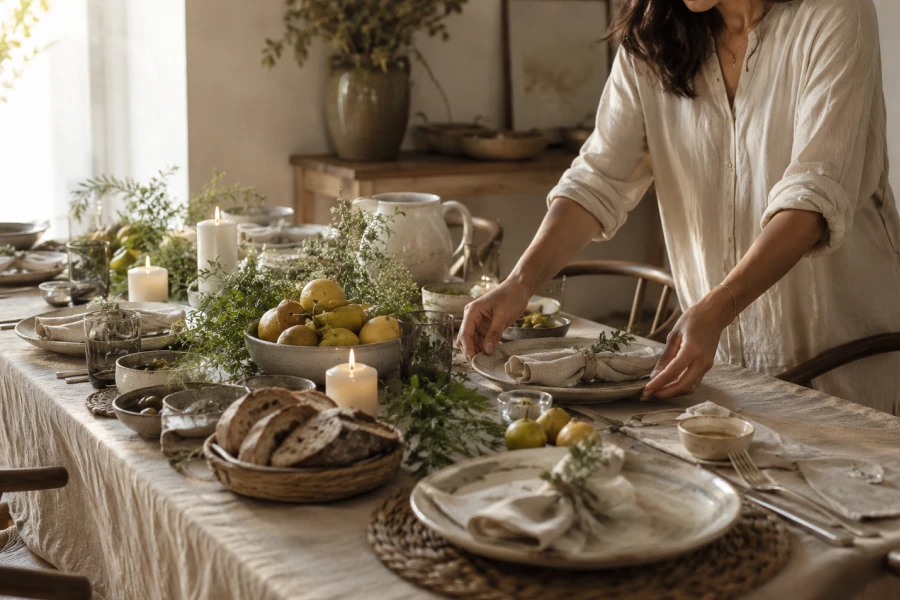
The best holiday tables do not look like they were assembled under pressure. Holiday tablescape ideas become more appealing when they leave space for food, laughter, and real movement. A setting can feel festive without looking overly polished. The secret is choosing a few meaningful details and letting them breathe. Start with what your table already offers. Consider the room, the meal, and the people you are welcoming. Then add elements that strengthen the mood. Every piece does not need to match. A lived-in table feels warmer because it has personality. That sense of ease often becomes the most beautiful part.
A table becomes more memorable when its details feel connected. Begin with one idea that reflects the gathering. It might be orchard colors, winter greenery, candlelit neutrals, or playful family traditions. Use that idea to make editing easier. Not every item needs to announce the theme. A few repeated colors or materials can do the work quietly. Let texture support the palette. Keep the food part of the visual story. A clear seasonal color story helps mixed pieces feel intentional. Simplicity gives your choices more impact. The room will feel considered without becoming rigid.
Start with something practical rather than decorative. A serving bowl, tablecloth, napkin set, or candleholder can become the anchor. Choose one piece that already feels right for the meal. Then build outward in small steps. A ceramic platter may suggest warm neutrals and dried branches. A patterned linen can inspire simpler plates and clear glassware. Useful objects keep the table grounded. They also prevent unnecessary purchases. Look for pieces that support hosting and contribute visually. The best starting point often already exists in your home. Use it as a quiet creative prompt.
Too many colors can make a small table feel busy quickly. Choose two or three core tones and let natural materials soften them. Cream, green, deep red, brown, gold, and soft blue can work well in many combinations. Repeating a color once or twice is often enough. You do not need every detail to match exactly. Let glass, wood, and ceramic create neutral pauses. This gives the eye room to rest. A calm palette makes food look more appealing. It also makes the gathering feel less formal. Thoughtful restraint can create a stronger impression than excess.
Celebration should never make a table difficult to use. Guests need room for serving dishes, drinks, and easy conversation. Keep tall décor away from central sightlines. Leave extra space around settings when possible. Choose textures that feel good in the hand. A soft napkin or warm wood accent can make a real difference. Building a hosting confidence routine helps you prioritize what guests actually experience. Beauty and comfort can coexist naturally. Let the table support the gathering. That is where its charm becomes most visible.
Imagine arriving at the table as one of your guests. Is there room to pull in a chair comfortably? Can everyone see one another? Are the serving pieces easy to reach? These questions lead to better styling than any trend forecast. A practical table feels generous before the meal begins. Place candles where they add glow without blocking movement. Keep centerpieces low enough for talking. Include details that make every seat feel considered. Guests notice when the setting makes them feel welcome. That feeling is the real measure of a successful table.
Perfect symmetry is not required for a table to look intentional. A slightly mismatched collection can feel more personal than a coordinated set. Fruit may lean naturally on a platter. Napkins may fold differently at each place. Flowers do not need to stand at attention. Those small variations make the scene feel human. An easy table styling plan can offer structure without removing spontaneity. Let meaningful objects appear where they make sense. The gathering matters more than a flawless photograph. Warmth always reads more beautifully than perfection.



Leave a comment