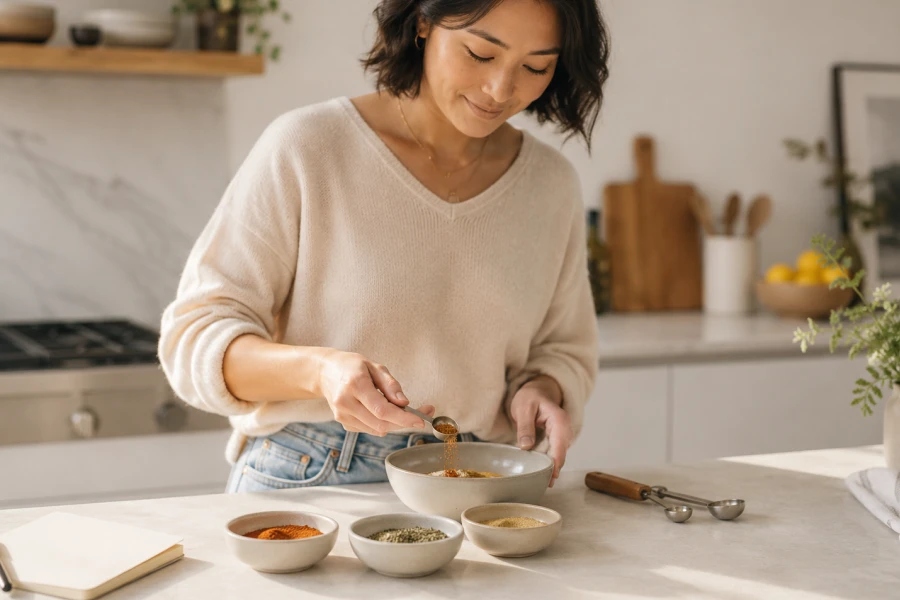
A crowded spice drawer can make cooking feel more intimidating than inspiring. Spice blending for beginners works best when the process starts small and stays practical. You do not need advanced equipment or a chef-level pantry. A few dependable spices can create more variety than several random blends. The goal is to understand flavor relationships, not memorize complicated formulas. One meal gives you a clear place to experiment. A small batch keeps the stakes low. Your senses become more useful with each attempt. Soon, seasoning feels less mysterious. It becomes an approachable part of everyday cooking.
Start with dishes you already cook successfully at home. Familiar meals make it easier to notice what a new blend changes. Roasted potatoes, sheet-pan vegetables, rice bowls, and simple soups all offer good practice. Choose combinations that match flavors you already enjoy. Garlic, black pepper, paprika, and oregano create an easy starting point. Cumin, coriander, and chile can move toward a warmer profile. Cinnamon, ginger, and cardamom suggest sweeter territory. A clear spice storage method helps you see what you actually own. Keep the experiment close to your everyday routine. Confidence grows fastest when the ingredients feel familiar.
A blend becomes easier to repeat when you use a simple measuring approach. Begin with one larger portion of the leading ingredient. Add smaller amounts of supporting spices around it. This structure keeps the result balanced without demanding perfection. For example, paprika can lead while garlic and onion provide depth. A tiny amount of cayenne can add warmth without dominating. Salt may be added later at the dish level. The point is to notice proportions, not chase a single correct formula. Use a spoon set consistently. Your future self will appreciate the record. Small measurements make experimentation more useful.
Smell each ingredient before combining it with another one. Aroma often tells you whether two spices will work together. Earthy notes usually welcome brighter accents. Sweet notes can soften heat and bitterness. Strong ingredients deserve careful treatment. Clove, allspice, smoked paprika, and cayenne can overwhelm a blend quickly. Pause before adding another spoonful. A personalized seasoning plan gives you permission to work from taste rather than rules. Your preferences are valid information. Trust them as you adjust.
Large batches create pressure because you may feel stuck with the result. Small batches invite a calmer learning process. Mix enough for one meal or two uses. Then cook with it before deciding whether it deserves a larger jar. Notice what happens after heat reaches the ingredients. Some flavors deepen in oil, while others become flatter. A blend that smells bold may taste restrained in a stew. Take brief notes after each meal. Those observations matter more than a perfect first attempt. Every jar can become a useful lesson. Practice builds a more intuitive cooking style.
Notes should support creativity, not make the kitchen feel like homework. Write a few words about what you used and where. You might record smoky, mild, bright, peppery, or good on chicken. These prompts make it easier to revisit a successful mixture. They also save you from repeating disappointing ones. Simple labels encourage practical choices on busy nights. The right kitchen blending tools can make the process cleaner and easier. A small bowl, spoon, funnel, and jar go far. Keep them nearby. Fewer obstacles mean more useful experiments.
A homemade jar can make a basic dinner feel more intentional. It gives leftovers a new direction without requiring a separate recipe. Sprinkle one blend over eggs, vegetables, or beans. Stir another into yogurt, broth, or olive oil. The same ingredients can feel different with a new seasoning approach. That is why a weeknight flavor shortcut can be so valuable. You save decision-making energy while still cooking with personality. The best blends become part of your rhythm. They make ordinary ingredients feel more like yours.


Leave a comment