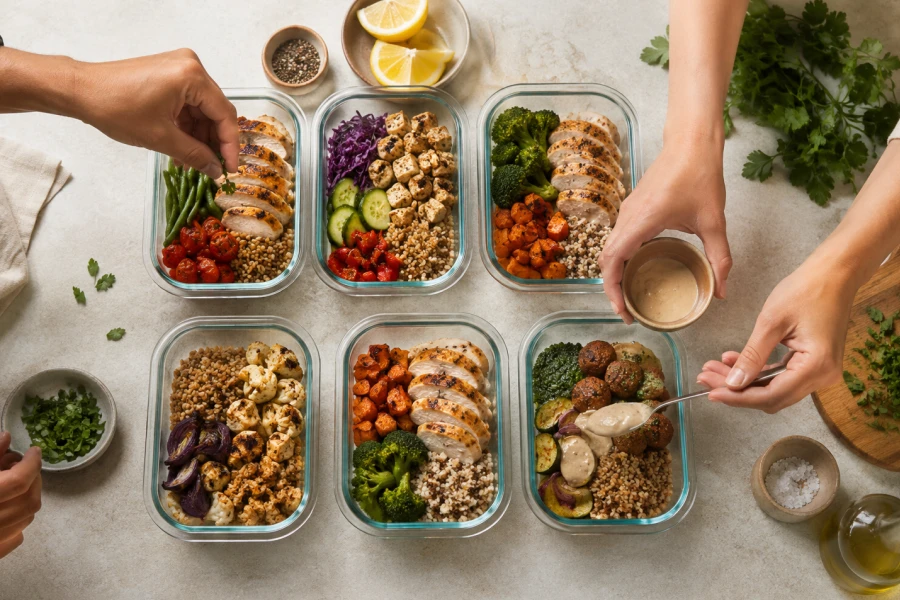
Meal prep can be helpful without turning every lunch into a copy of Monday. Protein meal prep for busy weeks works better when you prepare flexible components instead of finished containers. That approach gives you more choice when your appetite changes. It also keeps leftovers from feeling repetitive. Cook a few proteins, grains, vegetables, and sauces with different uses in mind. Then combine them in new ways as the week unfolds. One batch can become a bowl, wrap, salad, skillet, or soup. Variety comes from structure rather than extra work. Your prep should create relief. It should not create another rigid obligation.
Start by thinking about when you actually feel hungry and what you enjoy eating. A large lunch may work for one person but not another. Some weeks call for warm meals, while others invite cold bowls and quick snacks. Your plan should make room for those differences. Notice which foods disappear first from your fridge. Those are the ingredients worth preparing again. Lean into meals that have already proven useful. Practical lean protein cooking becomes easier when it reflects your real habits. You do not need a perfect routine. You need a workable one.
Prepare ingredients that can move across several meals. Roast chicken or tofu, cook a pot of grains, and wash sturdy greens. Make one bright sauce and one richer sauce. Then let the combinations change throughout the week. A grain bowl can become a wrap the next day. Leftover vegetables can join eggs for breakfast. Soup can gain a protein boost from beans or shredded meat. This strategy avoids meal fatigue. It also makes the refrigerator feel more useful. Build options instead of duplicates. Your future lunches will feel less predictable.
Texture is one reason identical meals become dull quickly. Soft grains need something crisp or fresh alongside them. Creamy sauces often benefit from toasted seeds or crunchy vegetables. Warm ingredients can work beautifully with cold, tangy elements. Keep a few simple toppings ready. Pickled onions, chopped herbs, nuts, seeds, and crisp greens can change a meal fast. Freshness makes prepared food feel less like leftovers. A set of high-protein breakfast ideas can also inspire smart texture combinations. Think beyond the standard lunch container. Your meals should give you something to look forward to.
A good plan leaves space for unexpected invitations and changing schedules. Do not prepare more than you can reasonably use. Keep some ingredients unseasoned until you know where they belong. Freeze extra portions before they lose their appeal. Use sauces near serving time when possible. That small decision helps food taste fresher. Midweek adjustments are not failures. They are part of cooking for real life. A flexible prep routine makes the week easier to navigate. Your kitchen should respond to your schedule. It should not demand more attention than you have.
Ingredients become more valuable when they serve several roles. A rotisserie chicken can support soup, tacos, salads, and grain bowls. Greek yogurt can become breakfast, sauce, or a creamy topping. Beans can appear in chili, salads, and wraps. Cooked vegetables can fill omelets or layer into pasta. Look for overlap before adding another specialty item. That choice keeps costs manageable. A reliable batch cooking rhythm grows from these simple connections. You save time by preparing less variety at once. The finished meals can still feel different.
Lunch deserves more planning than a forgotten snack between meetings. A prepared protein option can make the afternoon feel steadier and easier. Keep a few portions ready for quick assembly. Pair them with produce, a sauce, and something satisfying. You can also repurpose dinner components before they become leftovers. A supportive clean eating routine does not need to look restrictive. It can include cozy soups, creamy bowls, and familiar sandwiches. Make lunch appealing enough to choose. Your busy week will feel more manageable because of it.




Leave a comment