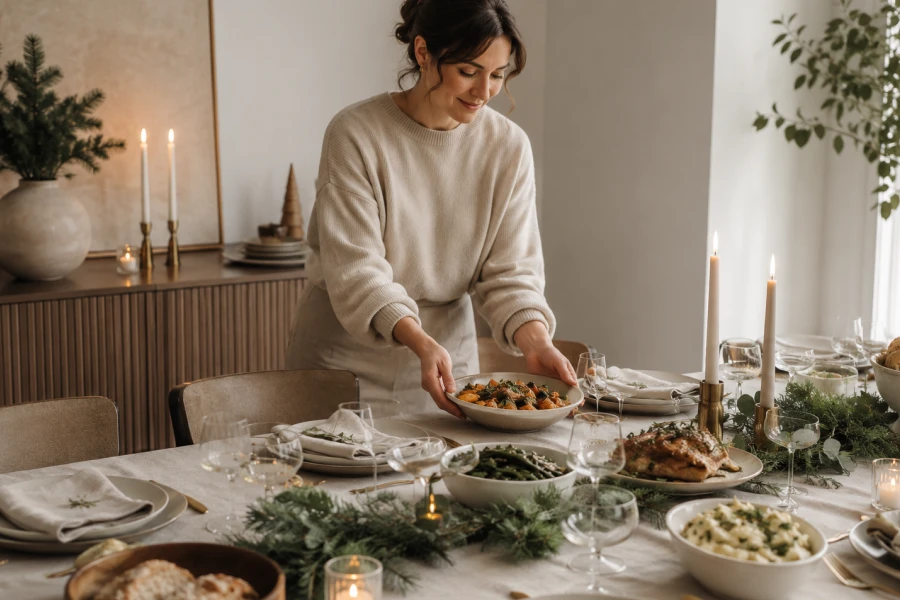
Holiday style does not need a long shopping list to feel generous. Festive table decor on a budget becomes more convincing when it uses repetition, texture, and soft light well. The most effective details are often already nearby. A bowl of fruit, a folded napkin, a branch, or a simple candle can create atmosphere. What matters is how the elements work together. Start with what you have. Then add one clear seasonal note. Focus on comfort rather than novelty. A well-edited table feels more expensive than an overcrowded one. Guests will remember the mood, not the price tags. Warmth is the most valuable detail.
Look through your kitchen and living spaces before buying anything new. You may find bowls, trays, linens, candles, and glassware that can work beautifully. Repeated materials create a sense of intention. A few neutral plates can become special with colored napkins. Old candleholders can feel new when gathered together. A basket may hold fruit, bread, or greenery. The goal is not to disguise everyday pieces. It is to use them with more care. Simple objects often become more striking when placed in groups. Let your home provide the starting point. Creativity grows faster when you begin with what is available.
Repeating a color, texture, or shape makes a table feel cohesive. Three small candles can look more intentional than one large statement piece. A few matching napkins can tie together mixed plates. Greenery placed in several small areas feels more natural than one oversized centerpiece. Repetition also makes budget-friendly details look more deliberate. Choose one or two notes to echo across the table. You might repeat deep green, warm brown, or soft cream. A gentle pattern can work similarly. Consistency is often more powerful than variety. Use it to create rhythm without visual noise.
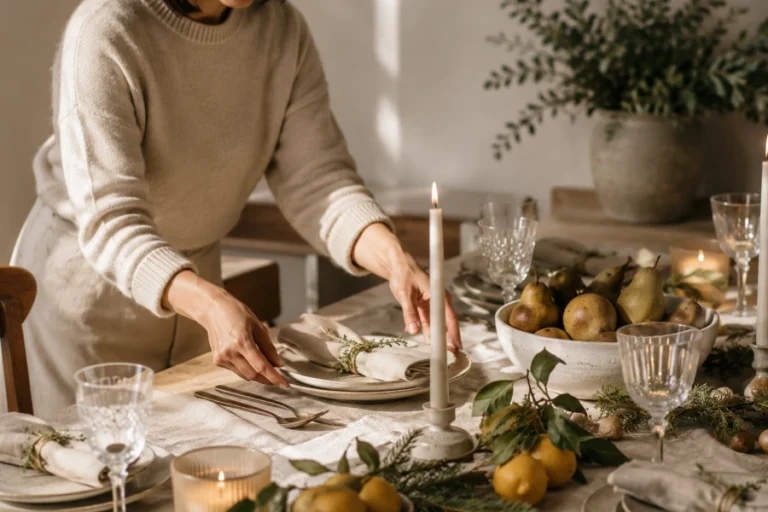
Nature and everyday ingredients can bring plenty of seasonal character. Citrus, apples, pears, herbs, nuts, and dried beans can become simple table accents. Branches, leaves, and greenery can add shape without requiring florist-level skills. Use items that fit the meal and the season. A bowl of pears can double as décor and dessert. Fresh rosemary can scent the table subtly. Dried orange slices can add warmth to a neutral arrangement. Keep everything low and easy to move. The most successful budget details often feel useful. Let the table look abundant without becoming wasteful.
Candlelight makes modest materials feel richer and more inviting. A few small candles can add warmth to simple dishes and linens. Choose low holders that feel stable around the table. Group candles in a few areas rather than spreading them everywhere. Their glow will create a stronger effect that way. Use a festive candlelight balance that leaves room for serving dishes and conversation. Avoid scents that compete with food. Soft light should support the meal. A gentle glow can make the entire room feel calmer. It is one of the easiest ways to create atmosphere.
Adding more is rarely the answer when a table feels unfinished. Instead, look for one detail that is pulling attention away. Remove objects that do not support the meal or the mood. Leave empty space around your main elements. A table needs room for plates, hands, and shared dishes. Editing also makes cleanup easier later. Group items rather than scattering them. Keep the center low and easy to navigate. Let one material appear in more than one place. This approach creates clarity. Often, a simpler table feels more festive because every detail can be appreciated.
Handmade details can bring warmth without adding much cost. Fold napkins in a simple consistent shape. Tie herbs around a place setting with twine. Use a handwritten place card only when it feels helpful. Layer a small branch or dried citrus beside a napkin. A few budget-friendly table accents can make each seat feel considered. Keep the gestures small and useful. Your guests will recognize the effort. The table becomes memorable because it feels personal. That kind of beauty never depends on a large budget.



Leave a comment